
Autonomic Dysreflexia (AD) Information Sheet
Autonomic dysreflexia is the term used to describe the paralysed body’s autonomic response to painful stimuli perceived below the level of the lesion. The sympathetic nervous system responds to these pain signals by vasoconstriction of blood vessels throughout the paralysed areas of the body resulting in gross hypertension (high blood pressure). It can be a fatal complication for any SCI person living with a lesion above T6 because a lesion at this level blocks the signals from the brain to most of the sympathetic ganglia (T2-T10) which would stop the malignant hypertension. As the systolic during AD can reach up to 330/160mm/Hg it therefore follows that unresolved it can cause cerebral bleeding and death. It is also important to remember that AD can occur at any time following the injury whether the injury is complete or incomplete and it is estimated that 90% of people with tetraplegia (all four limbs affected) will experience it – just because someone has never experienced one before doesn’t mean they can’t.
Symptoms – unless it is their first episode most SCI are familiar with the early signs and symptoms
- Pounding frontal headache
- Flushing or blotching above the level of the lesion (line of demarcation)
- Pallor below the lesion
- Profuse sweating above the lesion
- Bradycardia (slow heart rate)
- Severe hypertension
- Nasal congestion
Most common causes of AD
- Distended bladder (usually due to catheter blockage or some other form of bladder outlet obstruction)
- Distended bowel
- Ingrown toenail
- Fracture below level of the lesion
- Pressure sore, contact burn, scald or sunburn
- Urinary infection or bladder spasms
- Kidney or bladder stones
- Visceral pain or trauma (pain in the organs in the middle of the body)
- Pregnancy or childbirth
- Deep veined thrombosis or pulmonary embolism
- Severe anxiety
Priority actions
- Identify and eliminate the most common cause of AD, which is non-drainage of urine. If this isn’t the cause always reassure ethe person to eliminate or reduce anxiety as this can make it worse
- If you think non-drainage is an issue, contact the District Nurses or emergency services to replace catheter. DO NOT attempt a bladder washout as there is no guarantee that the fluid will be returned. Transferring the person onto the bed or lowering the angle of their elevation may relieve some of the abdominal pressure and would aloso make it easier to determine other possible causes
- Once you have eliminated bladder and bowel distension elevate the supine person up to induce some postural hypotension. If these causes have not been eliminated, then do not elevate further than 300 as above this this will increase abdominal pressure and also make identification of the cause more difficult
- If symptoms remain even after the stimuli has been removed or it cannot be removed administer the vasodilator prescribed
- Record the clients blood pressure every 15 minutes and reassure
- Report and record the episode
Although blood pressure is important and knowing the normal blood pressure for our client it is however vital never to delay investigations purely based on systolic or diastolic blood pressure reaching a certain level. Every client should have a management plan for the treatment of AD and it is important that you know the contents of this document.
Chronic Obstructive Pulmonary Disease
Chronic Obstructive Pulmonary Disease (COPD) is the umbrella term for a group of conditions that cause breathing difficulties. It is a common condition that mainly affects middle-aged or older adults who smoke. Many people do not realise they have it and put the cough down to ‘smokers cough’. The breathing problems gradually worsen over time and limit normal activities
The most common conditions classified as COPD are
The main symptoms are:
- Increasing breathlessness, particularly on exercising
- Persistent chesty cough with phlegm
- Frequent chest infections
- Persistent wheezing
Less common symptoms include:
- Tiredness
- Weight loss
- Swollen ankles – oedema due to fluid building up
- Chest pain and coughing up blood
Without treatment, the symptoms will get progressively worse. There may also be periods when they get suddenly get worse, known as a flare-up or exacerbation and these are often during the winter.
Most people with COPD do not have any noticeable symptoms until they reach their late 40s or 50s., which generally towards the latter stages of the disease
Healthy Lungs
The lungs absorb oxygen from the air you breathe in and transfer it into your bloodstream so that it can get to every part of your body. As the cells in your body work, they produce a waste gas called carbon dioxide that is released into the bloodstream. Your lungs get rid of this waste gas when you breathe out.
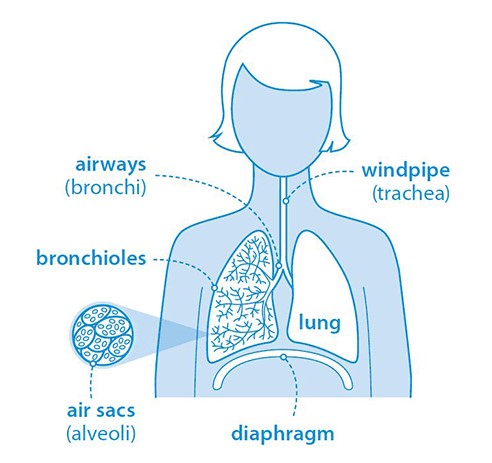
Your two lungs fill the chest and sit on either side of the heart. Lungs are made up of areas called lobes – the right lung has three lobes, and the left lung has two. The left lung is smaller than the right because it shares that side of the chest with the heart.
The windpipe – also called the trachea – carries air into the lungs and out again when you breathe out. The windpipe divides into airways called bronchi. These branch into smaller and smaller airways. The smallest are too narrow to be seen with the naked eye. This is often called the bronchial tree. At the end of these airways are tiny air sacs called alveoli. This is where gas exchange happens. Under a microscope, the inside of the lungs looks like a giant sponge
Causes of COPD
Chronic obstructive pulmonary disease (COPD) happens when the lungs and airways become damaged and inflamed and It’s usually associated with long-term exposure to harmful substances.
- Smoking. Is the main cause of COPD and is thought to be responsible for around 9 in every 10 cases. The harmful chemicals in smoke can damage the lining of the lungs and airways. Stopping smoking can help prevent COPD from getting worse. Some research also suggests that being exposed to other people’s cigarette smoke (passive smoking) may increase your risk of COPD
- Fumes and dust. Exposure to certain types of dust and chemicals at work may damage the lungs and increase your risk of COPD. Substances that have been linked to COPD include:
- cadmium dust and fumes
- grain and flour dust
- silica dust
- welding fumes
- isocyanates
- coal dust
- Air pollution. exposure to air pollution over a long period can affect how well the lungs work and some research suggests it could increase your risk of COPD. However, the link between air pollution and COPD is not conclusive and research is continuing.
- Genetics. Research has found that if a person smokes and they have a close relative with the condition they are more likely to develop COPD. Around 1 in 100 people with COPD has a genetic tendency to develop the condition, called alpha-1-antitrypsin deficiency. Alpha-1-antitrypsin is a substance that protects your lungs. Without it, the lungs are more vulnerable to damage. People who have an alpha-1-antitrypsin deficiency usually develop COPD at a younger age – particularly if they smoke
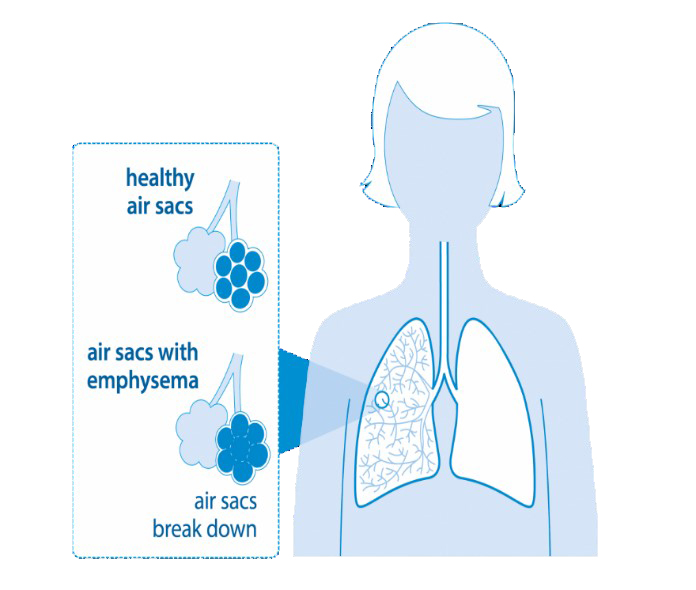
Emphysema
ith emphysema, the sacs break apart and merge into each other, producing holes in the lung.
Emphysema means that the damaged parts of the lung are baggy and trap air. When they breathe in, the damaged part of the lung inflates more and can get in the way of the healthier parts of the lung. The increase in the amount of air inside the chest is called hyperinflation. Making it uncomfortable to breathe as the chest becomes hyperinflated.
Chronic Bronchitis
Chronic bronchitis is the long-term inflammation of the bronchi which causes too much mucus to be produced. It is common among smokers. People with chronic bronchitis tend to get lung infections more easily. They also have episodes of acute bronchitis when symptoms are worse.
To be classified as chronic bronchitis:
• You must have a cough and mucus most days for at least 3 months a year, for 2 years in a row
Treatments for COPD
The damage to the lungs caused by COPD is permanent, but treatment can help slow down the progression of the condition and include:
- Stop smoking is the most important thing someone can do
- Inhalers and medication including oxygen
- It is important that acute exacerbations are treat with some urgency
- Pulmonary rehabilitation – exercise and education
- Surgery including lung transplant – although only available to a very small percentage of people mainly due to shortage of donors
The outlook for COPD varies from person to person. The condition cannot be cured or reversed, but for many people, treatment can help keep it under control, so it does not severely limit their daily activities. But for some people, COPD may continue to get worse despite treatment, eventually having a significant impact on their quality of life and leading to life-threatening problems.
Long term complications
Depression is a relatively common complication of COPD as, for many, the disease has far-reaching effects into every aspect of daily life and, unfortunately, the condition is often irreversible. Because fatigue plays such a major role in COPD, it can cause feelings of sadness and loss of enthusiasm or interest in everyday activities
Pulmonary hypertension occurs when there is abnormally high pressure within the blood vessels of the lungs. Normally, blood flows from your heart to pass through your lungs, where blood cells pick up oxygen and deliver it to the body. In pulmonary hypertension, the blood vessels in the lungs become thicker and narrower. This means less blood is able to flow through them. Pressure rises and the heart muscle must work harder to get the blood through the lung’s blood vessels. Ultimately, less oxygen reaches the body.
Pneumothorax is an accumulation of air or gas in the space between the lung and the chest wall. It occurs because of a hole that develops in the lung, which allows air to escape. This causes the lung to collapse partially or completely. People who have COPD are at greater risk for a pneumothorax because the structure of their lungs is weaker and more vulnerable to the spontaneous development of these types of holes.
Secondary polycythaemia in addition to the complications of ineffective breathing, the body is stimulated to make more red blood cells in an effort to compensate for hypoxia in the tissues. This results in thickened blood, with possible risk for thromboembolism and pulmonary hypertension as the pressure within the lungs increases. The blood flow from the pulmonary artery backing up into the heart can eventually lead to left-sided heart failure. If a person is a smoker, the chronic irritation to the alveoli also stimulates the inflammatory response, which creates vasodilation, release of histamines, and alveolar stiffening. With chronic hypoxia, the person can also develop chronic hyperventilation as a compensatory mechanism.
Cor Pulmonale is heart failure on the right side of the heart—the side that pumps blood from the organ to the lungs. Caused by an increase in blood pressure in the pulmonary artery, which is the main route for blood to travel from the right side of the heart to the lungs. Elevated blood pressure in this artery can strain the heart muscle on the right side. This then causes the right side of the heart to become enlarged and to develop heart failure, which means it can’t pump blood properly.
Respiratory failure is due to the inefficient transfer of putting oxygen into the blood and removing waste carbon dioxide from the blood. Symptoms of respiratory failure include shortness of breath, extreme tiredness and fatigue, confusion, and rapid breathing. This can be a medical emergency if these symptoms develop suddenly,
Cyanosis is a condition in which your blood oxygen levels have fallen drastically low and the body has difficulty getting enough oxygen to the extremities. This results in a blue or greyish cast to the skin, especially the lips and the area around the eyes. If this is a new symptom for someone then it should be treated immediately.
Dementia Information
Dementia is increasingly common around world affecting 36 million of whom it is estimated 26 million do not have a formal diagnosis. In the UK the number is estimated at 850,000 and rising. Although currently there is no cure for dementia, given these high numbers a lot of research on-going trying to identify possible causes and risk factors for dementia so it can be prevented or cured for those with the disease.
There are currently four types of dementia recognised
- Alzheimer’s disease 62%
- Vascular dementia 17%
- Dementia with Lewy bodies 4-10%
- Frontotemporal dementia 2%

Alzheimer’s is arguably the best-known form; it is a caused by degeneration of the nervous system especially those neurons in the brain. Protein plaques form most commonly in the temporal lobe of the brain, an area in which memories are formed. The plaque tangles lead to insufficient blood supply to the brain cells, and these eventually will die off. As the disease progresses the area affected gets bigger and symptoms worsen.
The cause is unknown, some research has suggested that up to 70% of cases are due to person’s genes while others believe lack of dietary vitamin B or because of an underactive thyroid gland.

Vascular dementia is caused by reduction in the blood supply to the brain due to diseased blood vessels. To survive the cells of the brain, need a constant supply of blood delivering the oxygen and nutrients they need. If these blood vessels leak or block, then the supply is reduced, and cells can eventually die. Vascular dementia can be split into three types depending on the cause of the damage.
- Post-stroke dementia – strokes happen because the blood supply to the brain is cut off. Severity of the stroke can vary but it is thought that up to 20% of all stroke victims go on to develop dementia.
- Single-infarct and multi-infarct dementia – This is caused by one or more smaller strokes. Sometimes the person may be unaware that they have had a stroke and the blockage manages to clear itself but if the area has been cut-off for even a few minutes this can led to cell death. When several stokes happen after each other the total damage caused by them results in multi-infarct dementia.
- Subcortical dementia – arguably the most common cause of vascular dementia and happens when blood vessels deep within the brain become twisted and stiff, causing reduced blood supply and then for these blood vessels to become diseased and led to this dementia.
Dementia with Lewy bodies (DBL)
This type shares many characteristics of Alzheimer’s and Parkinson’s disease, and many believe underdiagnosed. Lewy bodies are small deposits of proteins that sit in a nerve cell, but the link between these deposits and dementia is not fully understood. However, is believed there is an association with low levels of neurotransmitters which send messages between the cells and when these nerve cells die this leads to loss of brain tissue. How a person is affected is dependent on where in the brain the Lewy bodies are located. If they are in the base of the brain then motor skills are likely to be impacted, cognitive function will be impaired if located in the outer layers of the brain. Often these two diseases occur together and sometimes people with Parkinson’s will develop dementia as well. Together these diseases are known as Lewy body dementias.
Frontotemporal dementia
This is also known as ‘Picks disease’ or ‘frontal lobe dementia’. Frontotemporal refers to the area of the brain called the forebrain which is an area regulates an individual’s behaviour, emotion and language. Nerve cells within these areas die due to lack of chemical messages between them and when this happens the lobes shrink in size resulting in changes in a person’s personality and behaviour, they may also have difficulty with language.
Causes and risks of dementia
It is important to understand the difference between cause and risk as they are not the same
• Cause is something that has made something happen
• Risk factor is something that increases the likelihood of something happening
An example of cause and risk. A woman trips over the strap of her handbag, falls breaking her wrist, the cause would be the fall, but the risk factor was introduced when the woman put her handbag on the floor. If the bag hadn’t been put on the floor, she would be less likely to trip and sustain a fracture.
In terms of dementia this would mean that a person whose mother had dementia might ultimately be the cause of them developing the disease but if they smoked and had a poor diet, they have also increased their risk factor of developing the condition. Alternatively, a person whose mother has dementia but was none smoker with a good diet might still be diagnosed, but they have reduced their risk.
Causes of dementia.
The table below outlines some of the causes of dementia and how they contribute to the development of the disease.
| Causes | Contribution to dementia |
|---|---|
| Brain cell function and brain chemistry | Insufficient oxygen and nutrients cause cells to die. Brain chemistry must be adequate, this means neurotransmitters, such as dopamine, must be able to pass messages form one area to another |
| Head trauma | Anything that impacts the head causing disruption to normal brain functioning. Research indicates a moderate head trauma are twice as likely to develop dementia. The link is not fully understood but it is thought to cause a change in brain chemistry which can take years to become apparent |
| Brain tumour | This is a growth of cells in the brain which multiply in an abnormal way and cannot be controlled. |
| Stroke | See stroke dementia |
Risk Factors
The table below outlines some of the causes of dementia and how they contribute to the development of the disease.
| Risk factors that cannot be changed | Contribution to dementia |
|---|---|
| Age |
Risk increases with age. At 65 and above the risk factor doubles every 5 years. At age of 80 it is estimated 1 in 80 people are affected. Dementia at age of 65 is classed as ‘early-onset’ but it can happen at any age dependent on risk factors |
| Family history | No accurate predication of likelihood exists. there is a test available for a genetic mutation which makes them susceptible it is not 100% accurate |
| Down’s syndrome |
Having down’s syndrome increases the risk, at the age of 30 it is thought that 1 in 50 people with Downs will also have dementia and this figure increases sharply with age, at the age of 60 it is estimated about half will have the condition. |
| Gender | Women are more likely to develop Alzheimer’s dementia than men, but men are more likely to get vascular |
| Risk factors that can be changed | Contribution to dementia |
|---|---|
| Heart health and diet |
Good diet based on Mediterranean type foods such as fruit, vegetables and cereals as this diet decreases the risk of type 2 diabetes and stroke, these dietary changes also improve heart health reducing blood pressure which can led to stoke and less deposition of fatty deposits in the arteries |
| Alcohol misuse | Due to alcohol damaging brain cells. Alcohol is also linked with Korsakoff’s syndrome a specific dementia linked to Alzheimer’s |
| Depression |
Link is unclear but late diagnosis of dementia may indicate someone is developing dementia |
| Gender | Women are more likely to develop Alzheimer’s dementia than men, but men are more likely to get vascular |
| Lack of vitamin B | Lack of vitamin increases the level of an amino acid, but the reason is unknow why it leads to dementia |
| Smoking | Smoking causes the blood vessels to narrow and increases the risk of blockages. Smokers are twice as likely to develop dementia as non-smokers with vascular and Alzheimer’s disease being the most common diagnosed within this group |
Signs and symptoms of the common types of dementia
Early signs and symptoms – this stage is often referred to a pre-dementia
- Short-term memory loss
- Difficulty planning ahead
- Forgetting how to carry out routine tasks
- Forgetting the time
- Difficulty reading or seeing objects
- Social withdrawal
- Poor judgement
- Consistently losing things
- Problems with coherent speech
- Sudden changes in personality
Stage One
The individual may have noticed changes but are hiding signs and symptoms from friends and family.
Most common signs and symptoms
- Mood changes with bouts of frustration and irritability
- Memory lapses, problems retaining g new information or recalling recent incidents
- Loss of interest in hobbies
- Losing items
- Forgetting names and the words for common items
- Getting lost on previously familiar journeys
- Following instructions
- Visual and auditory
- hallucinations – only prevalent in Lewy bodies
Stage Two
At this stage there will have been a dramatic decline in memory, and they will no longer be able to hide it from others. They may require assistance with care, and it can be a very stressful time for family because they can appear to be a very different person than they were although they may have periods of lucidity
Most common signs and symptoms
- Severe elapses in memory
- Confusion about the time or period they are living in
- Mistaking family members for other people, believing grandson is in fact their own son
- Reading and writing skills almost gone
- Hallucinations
- Paranoia believing family are stealing from them or trying to kill them
- Problems with social norms and etiquette – leaving home in nightwear swearing
- Sleep disorders especially individuals with DLB
- Sundowning, symptoms worsen when daylight fades can lead to wandering in the middle of the night
Stage Three
This is classed as severe or advanced and the person will be totally dependent on care givers. Often this is the stage when family think about moving them into residential care as the person is more likely to display challenging behaviour and family find it increasing difficult to manage
Most common signs and symptoms
- Speech reduced to single word or simple sentences
- Incontinence
- Unable to feed themselves
- Apathy
- No personal hygiene routine. Possible they cannot remember how to self-care
- Muscle mass deteriorates as the person spends longer period in bed
- More likely to die for complications arising from the dementia rather than the condition itself for example infection
Other types of dementia
- Creutzfeldt-Jakob disease (CJD)
- Korsakoff’s syndrome
- Huntington’s disease
- Progression supranuclear palsy (PSP)
Diagnosis of dementia
Early diagnosis is important even though there is no cure it means that the progress of the condition can be managed, diagnosis offers the following
- The person can plan regarding financial and care needs for example
- Advice about benefits available
- Maximising quality of life
- Able to access treatment
Interventions following diagnosis
Reassurance – Gives the person reassurance and rules out any other health problems – often relief that they know what is wrong and they can plan what they do next. Although some people are angry and upset obviously
Assistance/support – Gives family practical and emotional support -from a variety of sources.
Practical support can come from.
▪ GP’s ▪ dieticians ▪ SALT ▪ OT’s ▪ mental health teams ▪ physiotherapists ▪ counsellors ▪ social services who may be able to offer respite ▪ Support groups can offer physical and emotional support
Emotional support is arguably as important as practical help. Often the individual with the diagnosis accepts things before their family do, therefore emotional is important to all the family
Other types of emotional support include
Contrary to popular belief, Lorem Ipsum is not simply random text. It has roots in a piece of classical Latin literature from 45 BC, making it over 2000 years old. Richard McClintock, a Latin professor at Hampden-Sydney College in Virginia, looked up one of the more obscure Latin words, consectetur, from a Lorem Ipsum passage, and going through the cites of the word in classical literature, discovered the undoubtable source. Lorem Ipsum comes from sections 1.10.32 and 1.10.33 of “de Finibus Bonorum et Malorum” (The Extremes of Good and Evil) by Cicero, written in 45 BC. This book is a treatise on the theory of ethics, very popular during the Renaissance. The first line of Lorem Ipsum, “Lorem ipsum dolor sit amet..”, comes from a line in section 1.10.32. Contrary to popular belief, Lorem Ipsum is not simply random text. It has roots in a piece of classical Latin literature from 45 BC, making it over 2000 years. The first line of Lorem Ipsum, “Lorem ipsum dolor sit amet..”, comes from a line in section 1.10.32. Contrary to popular belief, Lorem Ipsum is not simply random text. It has roots in a piece of classical Latin literature from 45 BC, making it over 2000 years.
- Support groups
- Starting new activities
- Seeking spiritual guidance
- Being enable to ‘live in the moment’
Treatment – An early diagnosis means treatment can be started immediately and if one treatment or medication doesn’t appear to be working it can be changed and an alternative tried, plus in some cases where some aspects of the dementia is due to vitamin deficiency, or a brain tumour treatment can reverse this. Medication available in the UK include, Donepezil, Rivastigmine Galantamine Memantine (Alzheimer’s only). These drugs work by making the remaining brain cells work harder although not cure they do make significant difference to a person’s day to day living.
Other non-medication treatment options available
- Counselling – this is a person-centred method where the therapist enables the person to identify their own solutions
- Cognitive behavioural therapy (CBT) – this aims to help someone change the way they think and behave, often in response to trauma
- Cognitive stimulation therapy (CST) – working in small groups completing activities over several weeks with the aim of improving mental abilities and quality of life
- Life story and reminiscence work – a scrapbook or photo album is used to record details of the person’s life experiences, valves, and beliefs. At Sphere SH we have introduced our ‘My Life’ book which the person or their families can compile
Forward Planning – early diagnosis means the person can plan ahead whilst they still have the mental capacity to be involved in areas like financial planning, getting benefits, possibly appointing a Lasting Power of Attorney (LPA). Where and who do they want to help care for them as often they don’t want to burden the family with this task.
Monitoring – is vital as someone can deteriorate rapidly and someone who seemed to have been living independently with a low level of care may suddenly need much more input. It is important that care givers and family monitor the person to keep them safe.
- Physical danger – the person may have continued to drive and doesn’t realise that worsening symptoms means they are not safe to continue doing this. Cooking can be a major danger it is very easy for someone to turn on the cooker but then forget all about it causing a fire. Mobility can quickly deteriorate increasing the risk of falling.
- Environmental – may need to have reminders posted throughout the house to take medication or to have a shower for example. Kitchen aids may be needed or the cooker isolated, labelling cupboards. If mobility is an issue, then equipment like perching stool, trolley to transfer food from the kitchen to dining room so the person doesn’t have to carry them
- Medication – monitoring the effectiveness of the drug as in the latter stages they will stop being of any benefit and therefore unnecessary. All medication has side effects and care givers need to be aware of these. Medication needs to be administered responsibility but with disease progression, people forget they have taken them or how many therefore steps need to be taken to store and administer the medication safely
- Monitoring treatable needs – individuals may have other physical and emotional needs that they are unable to communicate, for example urinary tract infections and severe constipation both common side effects of some of the medications prescribed for dementia both can be very distressing, and they may express this by displaying signs of behaviour that challenges
Common conditions sometimes attributed to dementia
Other common conditions mimic the signs and symptoms of dementia, so it is important that an accurate diagnosis is made ensuring the correct care and treatment is given. However, people with dementia can have stress, delirium, and depression as co-morbid conditions and making diagnosis more difficult
The four most common conditions
- Depression
- Stress
- Mild cognitive impairment (MCI)
- Delirium
Depression this is the most common as the early symptoms are almost identical and include memory loss, confusion, lack of concentration, and behavioural changes. Treatment options are totally different and the wrong treatment dramatically reducing the prospect of recovery from depression
Stress, like depression, the person may present with memory loss, confusion, lack of concentration, behavioural changes, and mood swings, they may also feel they have no control at work or in a relationship. A key difference between the two conditions is the memory lapses, someone with dementia may not acknowledge what they have forgotten even when prompted but someone suffering with stress may initially forget but quickly recalls when prompted
Delirium most commonly occurs in older people causing confusion, communication problems, sleep disruption, rambling and mood swings all common in dementia. Delirium can be caused be illness, infection, dehydration, malnutrition, medication side effects but once the cause has been eliminated then the symptoms resolve
Mild cognitive impairment (MCI) also known as late-life forgetfulness. Forgetfulness is part of the ageing process, but it does not have a debilitating effect on an individual’s ability to carry out day to day activities as would happen in dementia – for example a person with MCI will not forget how to get home from the shops nor would they make unsound judgement or behave inappropriately but they might forget where they put the car keys occasionally
Try this activity and see if you can make an accurate diagnosis
Colette and Martin are both 67 they have been married for 30 years and have lived in the same house since they married. They have three children, and 9 grandchildren who visit quite often.
Martin was supposed to meet Colette in town and completely forgot until he was texted asking where he was. As it had started raining Colette asked him to bring an umbrella with him, but he forgot and left it at home. Colette was very worried and persuaded him to see his GP for his memory lapses. Martin agreed as he had forgotten other things recently like the date of Colette birthday and was worried he had missed it. He also had forgotten one of his grandsons’ names when telling a friend a story about him although he was able to recall it a few minutes later.
Martin is a keen fisherman and enjoys long walks, doing embroidery especially cross stitch, going to the pub and socialising. He loves reading books and reads anything from Enid Blyton to historical romances especially Mills and Boon novels.
Question. Is it possible Martin has dementia? Explain your answer with at least two reasons.
Recording and reporting
Diagnosing dementia is difficult and certainly not in the remit of a care worker. But it is important to be aware of the possibility of dementia in the elderly and to report any concerns you may have because having assess to this information could assist the health professional make a formal diagnosis.
Reporting in the first instance is often verbal to the office but it’s not enough just to say you think Betty has dementia as this is your opinion, you need to report facts – why you think this is the case giving actual instances and times and should be followed by a written report and must be recorded by the office. Early stages are of dementia are difficult to spot as the person may cover themselves with excuses rather than admit any problem, also they are less likely to display symptoms consistently.
The following would be important information for a doctor to have access to when assessing for dementia
It is important to record information not only to assist with diagnosis but ensure that the correct treatment is in place following diagnosis to identify if the person needs any assistance and help them be as independent as possible. Information recording also
- Any medication they are taking, including any changes in medication since the person began showing signs and symptoms of dementia
- Memory issues
- Behavior and personality change – no matter how small
- How the person manages daily tasks
- How much care is being given and is it effective?
- Ensure health and safety of all concerned including any amendments to the environment are required for example, lists, signs, and aids
- To record the actions agreed are meeting the needs of the individual
- Ensure that nutrition needs are being met – monitoring can prevent prolonged nutritional problems before they put someone health art risk
- Ensure hygiene needs are being met
Types of memory
Memory loss is one of the first and most prominent symptom of dementia and cannot be reversed and is divided into short- or long-term memories
Short-term memory – this enables someone to hold onto information up to about 30 seconds so that it can be recalled immediately for usage or remembered by sending it to long term. An example of short-term memory is when someone is trying to remember a phone number the beginning of the number is held in short term memory so the rest of it makes sense
Long-term memory – more complex because information is stored withing it is separated into different types of which these are the most associated with dementia
- Emotional memory – triggered by an emotional attachment to an event, place, or person. Can be pleasurable or distressing memories
- Autobiographical memory – the history of a person’s life and all information they have gathered throughout their lives, past experiences, relationships, and time periods
- Procedural memory is knowledge of how to do something or anything, for example like riding a bike or crossing a road
- Semantic memory – general knowledge and facts about the world, such as capital of England. Also useful in finding the correct word to use in conversation
When an individual with dementia is losing the short-term memory, the area effected is in the prefrontal cortex of the brain as this is where short term memories are held. This can be very debilitating they will struggle to remember the context of a sentence or conversation they have just had or remember someone’s name they have just been introduced to. Additionally, it is common for someone to repeat themselves over and over or repeatedly read an article in a paper.
Long term memory is stored in two different area in the brain, and it is possible for their long-term memory to be intact with total recall from years ago despite poor short-term memory. Autobiographical memories tend to stay longer than any other memory unless the disease is attacking the cells in that area, they can with little prompt recall fine detail and discuss their history. If the hippocampus area of the brain is affected, then individuals will have problems recalling memories held in long-term store. This can be very upsetting for families the person is unable to recall who they are because ethe area of the brain responsible for matching a face to a name is no longer accessible to them. As long-term memory is stored in separate stores then it is possible that a person can remember how to wash and dress themselves (procedural memory) but cannot remember their occupation prior to retirement (autobiographical memory) or they may remember when their first child was born (emotional memory) but cannot recall their name (autobiographical memory).
When an individual is unable to recall information from either short or long-term memory if can have a significant impact on that person on
- Personality
- Mental and physical health
- Behavior
- Sociability
- Lifestyle
- General environment
Personality may change due to frustration at not being able to remember and can turn someone who was very gentle and happy to have bouts of anger and display changes in behaviour like irritability and disrespecting others.
Mental and physical health physical health many deteriorate as the person may forget to take medication or that they have a c condition which needs to be managed like for example diabetes. Depression is more prevalent more prevalent as they can o longer live the life they used to and are still aware of this and they are aware that their condition is only going to get worse.
Lifestyle and sociability are affected by memory loss as individuals may not feel like socialising as they feel embarrassed by their condition, if they are unable to recall someone’s name, they can their become isolated which is another risk factor in depression. Activities that they once may have enjoyed are not possible as they are unable to remember how to carry out this activity.
Memory problems may lead to changes to the environment and could even necessitate a move into residential care if no longer able to care for themselves and their behaviour may be seen as too risky for them to remain at home.
Communication and Interaction
Communication occurs in two ways, verbal and non-verbal. All forms of dementia present with communication difficulties but greatly depends on types of dementia and how advanced it is. In Frontotemporal dementia problems with language are one of the first symptoms. Additionally, language can fluctuate from day to day. Inability to find the correct word or suitable word to use in the context of a sentence is common and happens to us all now and then, but in dementia it’s the frequency and total inability to think of any idea of what word to use is the problem.
If someone is unable to follow a conversation, they feel embarrassed and/or frustrated and as such are likely to avoid a similar situation in the future. Loss of ability to use appropriate language leads to social isolation as family may feel embarrassed if the person uses challenging language, inappropriate tone of voice, words, or sentences. During the latter stages the individual can reach a stage where they can barely communicate, known as expressive dysphasia which can result in differing symptoms which include:
- Unable to speak
- Using single word sentences
- Saying no but meaning opposite
- Able to describe something but not know its name
- Using the same words in answer to everything or made-up words
Being able to follow instructions and the sequence something needs to be done in, may seem automatic to someone not suffering with dementia, however if the deterioration is in the brain which deals with these functions, then this becomes problematic. The person with dementia may be able to carry out each individual aspect of personal care but not get it in the correct sequence for example putting underwear on after trousers or trying to put socks on over their shoes.
Inability to recognise faces including their own and objects and places and can be challenging for the individual and their family. Simple tasks like how to use and what the spoon is used for means they do not connect it with eating, likewise cups may not be associated with drinking. It can therefore be a challenge when caring for someone. Unable to recognise even closed family can be distressing for family but scary for the individual as everyone are strangers to them.
If they person does not recognise their environment, they are likely to wander off looking for somewhere they do remember, so it is important that they are not left alone in a place where they could wander off and get lost. At Sphere Specialist Healthcare we encourage our services users to complete the Winnie Protocol or Herbert Protocol documentation
Epilepsy Information

Epilepsy is a condition that affects the brain. When someone has epilepsy, it means they tend to have repeated epileptic seizures. Anyone can have a one-off seizure (1 in 20), but this doesn’t always mean they have epilepsy as there can be numerous causes which trigger a non-epileptic seizure.
Some causes of non-epileptic seizures include.
- High temperature
- Low oxygen levels
- Low blood sugar
- Head trauma
Epilepsy can start at any age and there are many different types. Some types of epilepsy last for a limited time and the person eventually stops having seizures. But for many people epilepsy is a life-long condition. Epilepsy is one of the most common serious neurological conditions in the world. It affects around 600,000 people in the UK. This means that almost 1 in 100 people in the UK have epilepsy. Around 87 people are diagnosed with epilepsy in the UK every day.
Epilepsy is caused by disruption in the activity of the brain. We have thousands of cells in the brain, and they communicate and relay messages to each other by either chemical or electrical activity and this is happening in our brain all the time. A seizure happens when there is a sudden burst of intense electrical activity in the brain causing a temporary disruption to the way the brain normally works, so the brain’s messages become mixed up. The result is an epileptic seizure. Possible causes of epilepsy include:
- Brain damage, for example damage caused by a stroke, head injury or infection
- Brain tumors
- Problems with the way the brain developed in the womb
- Genetic factors
But in over half of all people with epilepsy, doctors can’t find a cause. It’s thought that our genes play a part in who does and who doesn’t develop epilepsy. This may explain why some people develop epilepsy with no clear cause. Researchers have found several genes linked to particular types of epilepsy. There are many types that doctors suspect are genetic, but they don’t yet know which genes are involved.
The main way doctors diagnose epilepsy is by taking a detailed description of the seizures. They may also arrange for some tests to help give them more information about the possible type and cause of the epilepsy. This can also help rule out any other conditions that could be causing seizures. These tests can include blood tests, an EEG (recording of the brainwaves) and a brain scan. But there isn’t a single test that can prove if someone does or does not have epilepsy.
The main treatment for epilepsy is epilepsy medicines. These are sometimes called anti-epileptic drugs or AEDs. The medicine doesn’t cure epilepsy but helps to stop or reduce the number of seizures.
Many people find that their seizures stop with the first or second medicine they try. But some people need to try a few medicines before they find one that works well for them. And some people need to take 2 or more epilepsy medicines together.
If epilepsy medicine doesn’t work well for someone, their doctor might suggest other types of treatment. Other types of treatment include brain surgery, another type of surgery called vagus nerve stimulation, and a special diet called the ketogenic diet which is sometimes used for children.
Seizure types
There are many different types of seizure. What happens to someone during a seizure depends on which part of their brain is affected, and how far the seizure activity spreads. During some types of seizure, the person may remain alert and aware of what’s going on around them, and with other types they may lose awareness. They may have unusual sensations, feelings, or movements. Or they may go stiff, fall to the floor and jerk.
Focal Seizures
When an epileptic seizure starts in one side of the brain, it’s called a focal onset seizure or a focal seizure. Both terms mean the same thing and until recently these seizures were called partial seizures.
There are many types of focal seizures, but they can be split in to two categories according to the level of awareness during the seizure
Focal aware seizures
During a focal aware seizure, you stay fully aware of what’s happening around you, even if you can’t move or respond. This type of seizure used to be called a simple partial seizure. The duration is usually between few seconds and two minutes.
Some people with epilepsy use the word ‘aura’ to describe the feeling they get that warns them they’re about to have tonic-clonic seizures The aura is in fact the seizure starting in one side of the brain as a focal aware seizure. To become a tonic-clonic the seizure then spreads to affect both sides of the brain. See focal to bilateral tonic-clonic seizures but they can also happen on their own, without developing into another seizure type. Some people who have focal aware seizures on their own also call them auras.
Focal impaired awareness seizures
If your awareness of what’s happening around you is affected at any time during your seizure, it’s called a focal impaired awareness seizure, this used to be called a complex partial seizure. The duration of these seizures tends to be one to two minutes. Someone having a focal seizure may not be aware of their surroundings or what they are doing. They may have unusual movements and behaviour such as plucking at their clothes, smacking their lips, swallowing repeatedly, or wandering around. You should guide them away from danger, such as open water or roads and stay with them until recovered. But don’t restrain them or act in any way that could frighten them like shouting and remember they may be unaware of what they are doing.
Call for an ambulance if any of these things apply:
- You know it is their first seizure
- The seizure lasts for more than 5 minutes
- They have one seizure after another without regaining awareness between seizures
- They are seriously injured during the seizure
Motor or non-motor
Doctors may also use the words motor or non-motor to describe focal seizures. Focal motor describes focal seizures where the main symptoms involve muscle activity, such as jerking, loss of muscle tone or repeated movements. Focal non-motor describes seizures where the main symptoms don’t involve muscle activity. They can include things like changes in emotions, thinking and sensations
.What happens during a focal seizure depends on which area (lobe) of the brain is affected, and whether the seizure spreads to affect other areas. Some people just experience one symptom during a focal seizure, while others experience several.

Frontal lobes
The symptoms of frontal lobe seizures can sometimes be mistaken for mental health problems or sleep disorders. Some people who have frontal lobe seizures only have them in their sleep. They are usually brief, but often happen in clusters, with several happening in a short space of time. Your awareness may or may not be affected.
Symptoms of seizures in the frontal lobes can include:
- Pelvic thrusting, kicking, pedalling, thrashing, or rocking movements
- Screaming, swearing, or laughing
- Unintentionally passing urine (urinary incontinence)
- Your head or eyes turning to one side
- Having unusual body movements, such as stretching one arm while the other bends
- Twitching, jerking, or stiffening of muscles in one area of your body. The movements may sometimes spread bit by bit to other areas
Occipital lobes
Seizures starting in the occipital lobe often spread to involve other lobes. Symptoms of seizures starting in the occipital lobe include:
- Seeing flashing lights, colours, or simple patterns
- Seeing more complex images, such as pictures of people, animals, or scenes
- Not being able to see as well as usual, or not being able to see at all
- Having eye movements you can’t control, such as your eyes closing, moving to one side, or rapidly moving from side-to-side
- Eyelid fluttering
Parietal lobes
Seizures starting in the parietal lobe often spread to involve other lobes. Symptoms of seizures starting in the parietal lobes can include:
- Having feelings of numbness or tingling
- Prickling, crawling or electric-shock sensations, which may spread along the affected body part
- Sensations of burning, cold or pain
- Feeling like part or all your body is moving or floating
- Feeling like a body part has shrunk, enlarged, or is missing
- Sexual sensations
- Difficulty understanding language, reading, writing, or doing simple maths
- Seeing things as larger or smaller than they really are, or seeing things that aren’t there
Temporal lobes
If you have been diagnosed with temporal lobe epilepsy (TLE) it means you have seizures starting in one or other of the temporal lobes. Seizures starting in the temporal lobes are usually focal impaired awareness seizures, but focal aware seizures can also happen. You might start the seizure being aware of what’s happening, and then lose awareness as the seizure progresses. Symptoms of seizures in the temporal lobes include:
- Feeling frightened
- Feeling like what’s happening has happened before (Deja vu)
- Experiencing an unpleasant taste or smell
- Having a rising sensation in your stomach
- Lip smacking, repeated swallowing or chewing
- Changes to your skin tone or heart rate
- Automatic behaviours such as fidgeting, undressing, running, or walking
After a temporal lobe seizure, you are likely to be confused, and may find it hard to speak for a short time.
After someone has a focal seizure varies from person to person. Some people may feel fine and able to get back to what they were doing straight away. Others might feel confused or tired for some time afterwards and may need to sleep. Some people find they have temporary weakness or can’t move part of their body after they’ve had a seizure. This is called Todd’s paresis or Todd’s paralysis. It can last from a few minutes up to 36 hours, before going away.
Myoclonic seizures
These are sudden, short-lasting jerks that can affect some or all of your body. They are usually too short to affect your consciousness. The jerking can be very mild, like a twitch, or it can be very forceful. Sometimes if the jerk is very forceful it can make you throw something you’re holding, or make you fall over. Usually, last only a fraction of a second although some people can have clusters over a period of time and following the seizure the person can go back to their normal routine.
Tonic seizures
These can be generalised onset, meaning they affect both sides of the brain from the start. Or they can be focal onset, meaning they start in just one side of the brain. Tonic seizures usually last less then 60 seconds.
If a tonic seizure starts in both sides of the brain, all your muscles tighten, and your body goes stiff. If you’re standing, you may fall to the floor. Your neck will extend, your eyes open wide and roll upwards. Your arms may raise upwards and your legs stretch or contract. You may cry out and stop breathing during the seizure. If a tonic seizure starts in one side of the brain your muscles tighten in just one area of the body.
Once the seizure has ended the person may feel sleepy or confused afterwards.
Atonic seizures
These can be generalised onset, meaning they affect both sides of the brain from the start. Or they can be focal onset, meaning they start in just one side of the brain. Atonic seizures are sometimes called drop attacks. They are very brief, usually lasting just one or 2 seconds.
If you have atonic seizures, usually all your muscles go limp and you drop to the floor. This can result in injuries to your head, nose or face. Sometimes you might not completely fall, but your head may drop forward or you might sag at the knees.
Your muscle tone returns as soon as the seizure is over. If you’ve fallen, you can get up again straight away.
Tonic-clonic seizures
Tonic-clonic seizures are the type of epileptic seizure most people recognise. In the past they were called grand-mal seizures. Tonic-clonic seizures can have a generalised onset, meaning they affect both sides of the brain from the start. When this happens, the seizure is called a generalised tonic-clonic or bilateral convulsive seizure. Some seizures start in one side of the brain and then spread to affect both sides, this is called a focal to bilateral tonic-clonic seizure
There are 2 phases in a tonic-clonic seizure: the ‘tonic’ phase, followed by the ‘clonic’ phase.
During the tonic phase:
- You lose consciousness, so you won’t be aware of what’s happening
- All your muscles go stiff, and if you’re standing you fall to the floor
- Air might push past your voice box, which can make a sound like you’re crying out
- You may bite down on your tongue or inside your mouth
During the clonic phase:
- Your limbs jerk quickly and rhythmically
- You may lose control of your bladder and/or bowels
- Your breathing may be affected, causing a blue tinge around your mouth
Focal to bilateral tonic-clonic seizures
If the seizure starts on one side of the brain and spreads to affect both sides, it’s called a focal to bilateral tonic-clonic seizure. If you have this type of seizure, you might get the symptoms of a focal seizure immediately before you lose consciousness. Examples of these symptoms are feeling frightened, having a rising sensation in your stomach or smelling something that’s not there. This can act as a warning that you’re about to have a tonic-clonic seizure. Some people call this warning an aura.
Most tonic-clonic seizures last between one and 3 minutes. If a tonic-clonic seizure lasts longer than 5 minutes you may need emergency medical treatment – it is important to follow the epilepsy management plan.
Recovery times again vary between individuals might have a
- headache and feel sore
- tired and very unwell
- Confusion or have memory problems
- Need to into a deep sleep for minutes or hours
The length of time it takes to recover after a tonic-clonic seizure is different from one person to the next. Some people feel better after an hour or so, but others it can be several days to feel ‘back to normal’
First Aid
Do
Protect them from injury (remove harmful objects from nearby)
- Cushion their head
- Look for an epilepsy identity card or identity jewellery – it may give you information about their seizures and what to do
- Time how long the seizure lasts
- Aid breathing by gently placing them in the recovery position once the jerking has stopped (see picture)
- Stay with the them until they are fully recovered
- Be calmly reassuring

Don’t
- Don’t restrain their movements
- Don’t put anything in their mouth
- Don’t try to move them unless they are in danger
- Don’t give them anything to eat or drink until they are fully recovered
- Don’t attempt to bring them round
Call for an ambulance if any of these things apply:
- You know it is their first seizure
- The seizure lasts for more than 5 minutes
- They have one tonic-clonic seizure after another without regaining consciousness between seizures
- They are seriously injured during the seizure
- They have trouble breathing after the seizure has stopped
Absence seizures
Absence seizures are a type of generalised onset seizure, meaning both sides of your brain are affected from the start. In the past absence seizures were called petit-mal seizures.
The 2 most common types of absence seizure are typical and atypical.
Typical
During a typical absence seizure, the person will be
- unconscious for a few seconds and unaware of what is happening and can’t be brought out of it
- stop what they are doing but will not fall
- may appear to be daydreaming or ‘switching off’
- eyelids might flutter and you might have slight jerking movements of your body or limbs
- Usually, last less than 10 seconds but in longer absences – have brief, repeated actions
Some people have hundreds of absences a day and often have them in clusters of several, one after another, and they are often worse when they are waking up or drifting off to sleep. Typical absence seizures almost always start in childhood before the age of 14
Atypical
These absences are like typical absences but last up to 30 seconds and they start and end more slowly. They may be able to move around, but the muscles might go limp or ‘floppy’, making them appear clumsy. You may be able to respond to someone during an atypical absence seizure.
Atypical absences often have learning disabilities or other conditions that affect the brain. Atypical absences can happen at any age.
After the individual can go straight back to what they were doing beforehand, however following a cluster of several absence seizures some feel confused
Wheelchair user
If a person with epilepsy uses a wheelchair or has mobility problems, their GP or epilepsy specialist should have a management plan and include advice on how to help the person if they have a seizure.
General advice
Do:
- Put the brakes on, to stop the chair from moving
- Let them remain seated in the chair during the seizure (unless they have a care plan which says to move them). Moving them could possibly lead to injuries for both you and them
- If they have a seatbelt or harness on, leave it fastened
- If they don’t have a seatbelt or harness, support them gently, so they don’t fall out of the chair
- Cushion their head and support it gently. A head rest, cushion or rolled up coat can be helpful
- Time how long the seizure lasts
The person’s care plan should give advice on what to do after the seizure has finished. For example, it should say if it is safe to move them from the wheelchair to put them in the recovery position.
Don’t:
- Don’t restrain their movements
- Don’t put anything in their mouth
- Don’t give them anything to eat or drink until they are fully recovered
- Don’t attempt to bring them round
Call for an ambulance if any of these things apply:
- You know it is their first seizure
- The seizure lasts for more than 5 minutes
- They have one seizure after another without regaining consciousness between seizures
- They are seriously injured during the seizure
Status epilepticus and emergency treatment
Most people with epilepsy have seizures that last a short time and stop by themselves. But sometimes, a seizure can last too long and become status epilepticus. Some people may need emergency medicine to treat status epilepticus.
Status epilepticus (sometimes just called status) is seizure activity that lasts too long. It happens when a seizure doesn’t stop in the usual time, or when someone has seizures one after another without recovering in between. Status epilepticus can happen with any type of seizure and occur in people who have never had a seizure before. For example, it can happen because of a stroke or head injury, or because of drug or alcohol abuse.
Convulsive (tonic-clonic) status epilepticus
Convulsive status epilepticus is when:
- A tonic-clonic lasts for 5 minutes or more, or
- One tonic-clonic seizure follows another without the person regaining consciousness in between
If either of these things happen, the person needs urgent treatment to stop the status before it causes long-term damage. If convulsive status epilepticus lasts for 30 minutes or longer it can cause permanent brain damage or even death.
Other types of status epilepticus
Some types of status, such as absence status and focal impaired awareness status, can be harder to spot. If someone is in one of these types of status (often called non-convulsive status) they may not show any obvious signs of having a seizure. They may appear confused and less responsive than usual or have changes to their speech or behaviour for no clear reason. Sometimes these changes can last for hours or even days.
Unlike convulsive status epilepticus, there is not much evidence to say when other types of status become an emergency, or whether they cause long-term damage. If someone you care for is at risk of any type of status epilepticus, their specialist should tell you the signs to look out for, and when to give treatment or get help
Reducing the risk of having status epilepticus:
- Always take your epilepsy medicine regularly, and never stop or reduce your medicine without advice from your doctor or nurse. Missing doses and stopping epilepsy medicine suddenly are common triggers for status epilepticus
- Limit the amount of alcohol you drink, but if you are alcohol dependent get medical advice before stopping. Alcohol withdrawal after excessive drinking can be a trigger for status epilepticus
- Find out if you have any triggers for your seizures, and avoid them where you can
Types of emergency medicine
There are two main types of emergency medicine licensed for use in the UK:
- Buccal midazolam: this is given by dropper, between the person’s gums and cheek. Brand names include Buccolam and Epistatus.
- Rectal diazepam: this is given rectally.
Seizures in or around water
Water sports in general
If the seizures are completely controlled, then sensible precautions are advised and MUST be risk assessed before Sphere Specialist Healthcare
If the person is still experiencing seizures
- Some water sports can be hazardous and may be best avoided
- Don’t do water sports on your own
- Make sure someone with you knows about your epilepsy and how to rescue you if necessary
- Wearing a life jacket is essential if there’s a danger of falling into the water
Swimming
If your seizures are completely controlled, you don’t need to take any greater safety precautions than anyone else. If you are still having seizures, you need to consider safety precautions. For example:
- Seek advice from your doctor or epilepsy nurse. Discuss issues such as your seizure type(s), frequency, and any other factors that could affect your safety when swimming
- It is always a good idea to have a companion in the water with you
- Talk to the staff at your local swimming pool about any special requirements you may have
- Use a floating/buoyancy aid
- If there is a lifeguard or pool supervisor present, make them aware of your epilepsy
- If there’s no qualified lifeguard present, don’t swim deeper than the shoulder height of the companion swimming with you
- Make sure that your companion knows what to do if you have a seizure and is strong enough to help you (see how to deal with a seizure in the water, below)
- Practise what to do if you have a seizure, with your companion. This will boost your confidence and theirs
- You could ask a lifeguard to show you how to deal with a seizure that happens in the water
- Don’t swim if you are feeling unwell
- Avoid overcrowded situations, as it might be difficult for others to notice if you have a seizure
Management of a seizure in the water
Tonic-clonic seizures – basic guidelines:
- From behind, tilt the person’s head so it is out of the water
- If possible, move the person to shallow water
- Shout for a lifeguard to help you get the person out of the water
Once the person is out of the water:
- Cushion their head with something soft (for example a towel)
- Don’t restrain their movements or place anything in their mouth
- If the person has been prescribed emergency medicine, give this if needed
- When the jerking movements have stopped, place them on their side to recover
- Keep them warm and stay with them until they feel better
Absence and focal seizures – basic guidelines
Protect the person from danger, for example by guiding them away from deep water or by holding their head above the water. When they recover, check if they need to get out of the water as they may feel confused and need to rest.
When to call an ambulance
Call an ambulance if:
- The person may have swallowed or breathed in water, even if they appear to be fully recovered or
- You know it’s the person’s first seizure, or if the person is unknown to you or
- The person goes from one seizure to another without regaining consciousness between seizures or
- The seizure lasts longer than is usual for the person or, if in doubt, when the seizure continues for more than five minutes or
- The person has been injured
Motor Neurone Disease (MND)
With MND the messages from the motor neurones gradually stop getting to the muscles, causing the muscles to weaken, stiffen and waste affecting how someone talks, walks, eat, drink, and even breathe. Some people experience changes in how they think and behaviour. MND affects everyone differently, not everyone will have all the symptoms, nor will they progress at the same rate or in the same order.
MND is life shortening, there is no cure, and the disease will progress some of the symptoms can be managed to help achieve the best possible quality of life. People over the age of 50 are more likely to be diagnosed with MND but it can affect 1 in 300 adults of any age. As the progression of the disease is rapid the prevalence in the UK is low with around 5000 living with MND at any one time.
Types of MND
There are four main types, but diagnosis is difficult as many of the symptoms overlap, diagnosis is often reviewed and changed at any time as the condition progresses.
Amyotrophic Lateral Sclerosis (ALS): is the most common form of MND, with weaknesses and wasting in the limbs, muscle stiffness and cramps. Someone may notice they are tripping when walking or dropping things. Life expectancy is 2 -5 years from the onset of symptoms.
Bulbar-onset MND or Progressive Bulbar Palsy (PBP): affects the smallest number of people mainly affecting the facial, tongue and throat muscles. Therefore, early symptoms are usually slurring of speech and/r difficulty swallowing. Life expectancy is usually 6 months – 3 years from the onset of symptoms.
Progressive Muscular Atrophy (PMA): affects only a very small; proportion of people. Early symptoms may show s weakness or clumsiness of the hands. Life expectancy is usually more than 5 years.
Primary Lateral Sclerosis (PLS): is a rare form of MND, causing mainly weakness and stiffness that usually begins in the lower limbs, although many people experience additional problems with their speech and various other symptoms. PLS is usually not life-shortening, as it progresses very slowly. It may take time to confirm a definitive diagnosis because the slow progression in ALS may look similar at first.
Causes of MND
For most people with MND, genes have a minor role in developing the disease. However approximately 1 in 10 people have inherited MND but even for these individuals it is felt that other factors may trigger the disease to develop. Lifestyle and environmental factors have been researched and some studies although not conclusive by any means, did find possible links with,
- Mechanical and/or electrical trauma
- Military service
- High levels of exercise
- Exposure to agricultural chemicals, and
- Exposure to heavy metals
Diagnosis
Although there is no single test to diagnose MND, several tests can be carried out to discount other conditions or injuries and the tests requested will very much depend on the persons symptoms and include.
- Clinical examination
- Blood tests looking at raised levels of creatinine kinase
- Electromyography (EMG) – records muscle nerve impulses
- Transcranial Magnetic Stimulation (TMS) which measures the activity of the upper motor neurones
- MRI helps to rule out Alzheimer’s, Parkinson’s, MS, tumours, trapped nerves stroke as well as injuries to the spine and brain
- Nerve conduction tests measure the speed the nerves carry electrical messages
Inherited MND
This is caused by a mistake in the genetic code which holds the instructions for making every protein in the body but involves many genes and although someone may have the defect it is felt that other factors may trigger the condition as discussed earlier. But research has recently found a link between a family history of MND and family history of frontotemporal dementia.
The instructions for the way that our bodies develop, and function are provided by genes. We have two copies of genetic instructions for every hereditary characteristic: one copy provided by our father and one copy provided by our mother. Inherited MND is passed down from one generation to the next when somebody inherits a certain faulty, or mutated, gene from one of their parents. Inherited MND i nearly always follows what is known as a ‘dominant inheritance pattern’. This means that it only takes one faulty copy of the gene to cause the disease: a person with the inherited form of MND will, in most cases, have one faulty copy and one normal copy.
As the diagram shows, an affected parent can pass on either their faulty copy of the gene or their normal copy to each child. For example, Bill has passed on the faulty gene to Robert and Wendy and the normal gene to John. John is at no greater risk of getting MND than somebody who does not have MND in their family. Peter may experience his first symptoms in his forties, whereas Jenny may not get MND until her sixties. Both have carried the same mistake in their genetic code all their life, but the disease has taken a different length of time to appear. This tells us that there are other factors influencing disease onset in inherited MND. Importantly, even if you have an MND-causing gene, you may not ultimately go on to develop the disease – this faulty gene may only increase your risk of developing MND in the future.

Treatments
Riluzole is currently the only drug licensed for treating MND in the UK and its use can only be initiated on the advice of a neurological specialist, as it is not suitable for everyone or for all types of MND. Electrical messages are transmitted from one motor neurone to the next via the release of a chemical messenger. For many motor neurones this chemical messenger is a chemical called glutamate, but high concentrations of glutamate are toxic. Riluzole is thought to work by suppressing glutamate activity and thereby slowing down the progression of the disease and increase survival by several months.
However, riluzole is not a cure, it will not reverse damage to motor neurones which have already been affected, therefore treatment needs to start within 18 months of diagnosis. Some people with MND also report a positive effect on their psychological wellbeing, by taking a drug that may help extend survival.
Some of the most common side effects may include:
- Nausea and Vomiting
- Weakness
- Extreme Tiredness
- Headache
- Numbness
- Dizziness (which may affect the ability to drive safely).
Stem Cell Treatment
Currently this is not available however research has suggested that in the future it may be useful
Physiotherapy
Physiotherapy involves exercise to maintain muscles that have not been affected by MND, improve flexibility, and help prevent stiffness and pain. The therapy may include assisted or ‘passive’ exercises which often carers are shown how to provide support.
Exercise
Excessive exercise is NOT advised with MND and can cause fatigue and injury; therefore, medical advice should be sort before suggesting
- Alexander technique
- Dance therapy
- Kinesiology
- Pilates
- Tai-chi
- Yoga for example.
Hydrotherapy
Involves doing specific exercises in a pool of warm water with a qualified physiotherapist. The body weight is supported by the water, which helps relieve pain and allows more free movement. The warmth of the water helps to relax and ease the joints and muscles.
Acupuncture
Is based on the theory that energy flows through channels in the body, known as meridians. This energy should flow freely and evenly and must be in balance. It is believed the body can experience stress if the flow is blocked. Fine needles are inserted into points on the body where channels are thought to be, to stimulate the flow of energy. Acupuncture therapists believe this can help with a range of symptoms including pain and problems with sleeping.
Complimentary therapies
Some people find therapies such as meditation, massage, or reflexology, can help to alleviate symptoms and promote calm and well-being. Art and music therapy uses art to help people express themselves freely and address emotional issues which may feel difficult using words, this can help with difficult emotions. Hypnotherapy Therapists use hypnosis to create a state of deep relaxation This enabling the hypnotherapist to ‘suggest’ to the subconscious mind how to respond to certain problems or situations A range of emotional problems can be tackled with hypnotherapy, including fears, phobias, stress, panic, sleep problems and anxiety
Multiple Sclerosis (MS)
This is a condition that can affect the brain and the spinal cord, causing a wide range of potential symptoms and it is one of the most common causes of disability in younger adults and commonly diagnosed between the ages of 20 to 30 although can develop at any time. It is about 2-3 times more common in women. MS is rarely fatal however life expectancy is slightly reduced by about 5-10 years, and complications like chest or bladder infection or swallowing difficulties can affect this.
It’s a lifelong condition that can sometimes cause serious disability, although it can occasionally be mild, and symptoms vary from person to person and include:
- fatigue
- Problems with walking
- Problems controlling the bladder Visual problems like blurred vision
- Numbness or tingling in different parts of the body
Muscle stiffness and spasms Problems with balance and co ordination
- Problems learning with thinking, learning, and planning
MS is an autoimmune condition. This is when something goes wrong with the immune system and it mistakenly attacks a healthy part of the body – in this case, the brain or spinal cord of the nervous system. Exactly what causes the immune system to act in this way is unclear, but most experts think a combination of genetic and environmental factors is involved.
In MS, the immune system attacks the layer that surrounds and protects the nerves called the myelin sheath, damaging and scaring the sheath, and potentially the underlying nerves, meaning messages travelling along the nerves become slowed or disrupted.

Types of MS – MS starts in one of two ways
Relapsing remitting MS
This is the most common with 8 in every 10 people diagnosed with this type. The person will have episodes of new or worsening symptoms, known as relapses, which typically worsen over a few days, last for days to weeks to months and slowly improve over a similar period of time. These relapses often occur without warning but are sometimes associated with periods of illness or stress. Sometimes the symptoms of a relapse may disappear totally, with or without treatment, although some can persist, with repeated attacks happening over several years.
Periods between attacks are referred to as remission and can, last several years. However, after many years (usually decades), many, but not all, people with relapsing remitting MS go on to develop secondary progressive MS.
In this type of MS symptoms gradually worsen over time without obvious attacks. Some people continue to have infrequent relapses during this stage. Around half of people with relapsing remitting MS will develop secondary progressive MS
within 15 to 20 years, and the risk of this happening increases the longer you have the condition
Primary Progressive MS
Just over 1 in 10 people with the condition start their MS with a gradual worsening of symptoms
In primary progressive MS, symptoms gradually worsen and accumulate over several years, and there are no periods of remission, though people often have periods where their condition appears to stabilise
Treatments
There’s currently no cure for MS, but a number of treatments can help control the condition. The treatment you need will depend on the specific symptoms and difficulties you have. It may include:
Treating relapses with short courses of steroid medicine to speed up recovery
- Specific treatments for individual MS symptoms
- Treatment to reduce the number of relapses using medicines called disease-modifying therapies
Disease-modifying therapies may also help to slow or reduce the overall worsening of disability in people with a type of MS called relapsing remitting MS, and in those with a type called secondary progressive MS who have relapses.
Unfortunately, there’s currently no treatment that can slow the progress of a type of MS called primary progressive MS, or secondary progressive MS in the absence of relapses.
Spinal Injury Information
Although possible in certain circumstances like hanging or penetration injury the spinal cord can be severed, in most cases, spinal cord lesions are due to ischaemic necrosis due to a prolonged loss of blood and oxygen supply to the spinal cord leading to tissue death. Compression of the cord is due to oedema which leads to swelling within the structural confines of the vertebral canal where there is limited space for it to expand. The initial problem can be due to displaced vertebrae squashing the cord or alternatively stretching of the cord. There is an almost immediate cessation of messages within the cord this is called ‘spinal shock’. Neurologically if the person has a complete injury they present with total loss of all voluntary movement and sensation below the level of the injury plus total loss of autonomic function affecting the internal systems. Incomplete injuries can result in differing impact to these systems although in the early days following the injury they may present as having a complete injury due to spinal shock.
Non-traumatic Spinal Cord Injuries
Other causes include:
- Vascular incidents like thrombosis or haemorrhage
- Infections of the spinal cord or abscesses like those associated with tuberculosis
- Viral infections or example transverse myelitis
- Non-malignant growths
- Spina bifida
Level of injury and resulting paralysis

Psychological Impact
Tetraplegia is another word for quadriplegia
Suicide rate is approximately two to six timers greater in SCI people, the following have been identified as risk factors:
Although possible in certain circumstances like hanging or penetration injury the spinal cord can be severed, in most cases, spinal cord lesions are due to ischaemic necrosis due to a prolonged loss of blood and oxygen supply to the spinal cord leading to tissue death. Compression of the cord is due to oedema which leads to swelling within the structural confines of the vertebral canal where there is limited space for it to expand. The initial problem can be due to displaced vertebrae squashing the cord or alternatively stretching of the cord. There is an almost immediate cessation of messages within the cord this is called ‘spinal shock’. Neurologically if the person has a complete injury they present with total loss of all voluntary movement and sensation below the level of the injury plus total loss of autonomic function affecting the internal systems. Incomplete injuries can result in differing impact to these systems although in the early days following the injury they may present as having a complete injury due to spinal shock.
- Post-injury despondency
- Shame
- Apathy
- Hopelessness
- Pre-injury family disruption
Sexual issues
There is a lot of advice and fact sheets available from the Spinal injuries Association.
Often people focus too much on the more practical basic functional aspects of SCI rehabilitation and sexual activity if overlooked although factors like incontinence can have a negative impact on sexual activity. Erectile dysfunction is common in SCI men however medication and other treatment are available to help them achieve erection and in some instances ejaculation.
Initially menstruation stops for about a year after the injury but once reinstated managing their periods with the assistance of others may be difficult to accept and not always readily available to assist with changing pads or tampons. Sitting for extended periods with wet material next to their skin can led to skin breakdown and/or infection and for this reason internal sanitary protection is usually preferrable. However, unless the person has personal assistants or possibly family members willing to carry out this task using internal devices is not possible.
Practical Impact
Many of the practical impacts of an injury are obvious to most people, with mobility being one of most obvious but this is only the tip of the iceberg.
If the person is young prior to the injury, they may not been on any regular medication and now have drug to help with spasm, pain, bowel management or anti-depressants for example. Depending on the level of injury they may need a lot of help with personal care including toileting, bowel management, dressing and undressing from family and/or carers. Changes to what clothes they wear as tight items will be more difficult to put on or take off and to access toilets etc.
Socialising is no longer easy or as spontaneous as it was, trips out to the pub for example, factors like wheelchair access and other facilities must be considered. Employment changes and possibly the financial implications if unable to continue working. Changes in relationship as family members find themselves slipping into the role of care giver than partner.
Whilst there is no reason if SCI person takes care of themselves and enjoys healthy lifestyle there is no reason why they cannot enjoy a full life. However, historically urinary tract infections and renal complications have been a major cause of early mortality and long-term morbidity therefore bladder management is vital.
Bladder management
The upper urinary system the kidney and ureters are not usually directly affected by the SCI, but the kidneys are vulnerable if the pressure within the bladder is abnormally high. The lower tract which consists of the bladder and urethra, are responsible for the safe storage of urine and the voiding The nerve supply to control these is located in the sacral section of the cord. A spinal cord injury can affect the level of control you have over your bladder if the emptying process is not perfectly coordinated. This is because messages no longer pass between the bladder muscles and the brain. If the SCI is located T12 or below then the person may have problems voiding, this a led to retention of urine and kidney damage or incomplete voiding which leads to stale urine remaining in the bladder increasing the risk of urinary tract infections. Alternatively, if the SCI is above T12 this can mean the bladder is still able to hold and void urine, but the person has no awareness of this, and they are incontinent
Some SCI people may feel worried and embarrassed to think about the way your injury has affected how they urinate. But, with the right support, the hope is they can gain as much control over the bladder as possible This is important for their self-esteem and avoiding infections.
There are several options available to manage emptying the bladder and it is important that the best method is used to limit potential problems.
Catheters
A catheter is a flexible tube that’s used to empty the bladder and collect urine in a drainage bag. It’s usually inserted into the bladder through the urethra, the tube that carries urine out of your body.
The three main types of catheters are:
- Indwelling urethral catheter, which is held in place by a water-filled balloon to stop it falling out. You may have this type when you first have your injury.
- Intermittent catheter is inserted into your bladder every few hours to drain it. This can be done yourself or if you’re unable someone else can be taught to do this for you
- Suprapubic catheter is inserted through a hole in your tummy (abdomen) into your bladder.
The right catheter for you will depend on a few things, including your hand function, gender and how often you get urine infections.
Indwelling catheters are widely used however they are not without complications:
- Increased risk of trauma to the urethra and bladder neck
- Encrustation and bladder stones
Infection - Kidney stone disease
- Decrease in bladder capacity and loss of tone
- Increased risk of bladder tumours
- Blocked catheter drainage may lead to incontinence or may trigger severe autonomic dysreflexia
Urinary Sheath / External Urinary Collection Device (EUDS)
A urinary sheath or condom is applied to the penis and attached by a plastic tube to a collecting bag. This is strapped to your leg or belly or hung beside your bed or wheelchair. As this is non-invasive method it does avoid many of the disadvantages of the indwelling catheters:
- Sensitivity to EUCD material
- Problems with adhesion and displacement due to retraction
- Applied too tightly can cause pressure ulceration and erosion of the urethra
- Risk if kidney damage due to dysfunctional bladder
Bowel Management
Defaecation is a complex coordinated process normally and involves voluntary and involuntary activity in several body organs. Faeces is formed in the small intestine and moves into the large bowel or colon where water is absorbed making it more solid. Peristalsis (a muscular movement) propels the faeces form the sigmoid colon into the rectum. The rectum is a storage and expulsion vessel. Unlike the bladder it is normally empty. The arrival of the stool in the rectum triggers the urge to defaecate, although this can be delayed by the individual until a more convenient time is to void the bowel. The rectum opens into the anus which consists of two sphincters the internal anal sphincter and the external anal sphincter, the latter being under voluntary control. When defaecation begins the rectum contracts powerfully which causes the internal anal sphincter to relax and at the same time raising abdominal pressure by using the diaphragm, abdominal muscles and closing of the glottis. The rise in pressure causes the pelvic floor to relax allowing easier passage of faeces.
Bowel dysfunction
As with the bladder, the level and degree of neurological completeness of the SCI person is a factor in determining the nature of bowel dysfunction. As voluntary control is via the sacral nerves (S2-S4) any SCI is likely to affect communication between the brain and anorectal structures.
Lesions above T12 affect upper motor neurones leaving the reflex pathways intact. Therefore, the reflex functions of the anorectum are preserved but sensation and voluntary control are lost.
Lesions below L1 and below also have sensation and voluntary control lose but in addition there is a loss reflex function.
The aim is to achieve a system that is safe and acceptable to the person. Maximising continence is a priority as 11% of SCI people will have an episode of incontinence weekly and it is reported that it is the single most restricting complications of living with SCI and can affect their quality of life, limiting social life, recreational activities, education, and sexual activity.
Preventing constipation is important to reduce the potential complication as haemorrhoids, anal fissures, megacolon and rectal prolapse. However, the use of chemical stimulus for example bisacodyl is linked to the development of megacolon, a potential serious condition where the colon is dilated. Preventing AD is also an important feature of bowel management as a mass of constipated stool in the rectum and/or excessive stimulation used from the interventions to remove it.
It is important that regular evacuation takes place to avoid complications and frequency depends often on the bowel pattern prior to injury – some people may need daily interventions whilst others alternate days.
Emergencies and potential complications of chronic SCI
Anaemia – regular monitoring of haemoglobin is usually carried out.
Autonomic Dysreflexia – potentially lethal complication in SCI people with lesion above T6 caused by hypertensive due to a painful stimulus (see separate information sheet)
Calculi (renal and bladder stones) – urinary stones are one of the commonest and long-term problems of SCI
Carpal Tunnel Syndrome – nerve compression at the wrist associated with local trauma like wheelchair pushing and manual transfers
Contracture – deformity of a joint cause by extended period of immobilisation or an imbalance between opposing muscles groups. Stretching, splinting, exercises, standing can help to limit these
Diabetes – the incidence of impaired glucose tolerance following SCI in increasing. Monitoring of skin and daily foot care in addition to dietary changes are necessary
Heterotopic Ossification – this is the formation of new bone laid done in the soft tissue around paralysed joints and this can have an impact on mobility and increase in spasticity. Occasional severe swelling can occur resulting in compression on vascular structures or nerves. It is important it is diagnoses as early treatment is important
Hyponatraemia – SCI people should drink plenty of fluids BUT a maximum volume of 5 litres per day to avoid overhydration leading to cerebral confusion and collapse.
Ingrown Toenails – common following injury especially tetraplegic individuals and a common cause of spasticity and autonomic dysreflexia. Footcare is important and regular checks by chiropodist
Low-energy Fractures – the bones located in the paralysed areas of the body become osteoporotic and fractures can occur without obvious trauma
Postural Hypotension – this is a significant drop in blood pressure on assuming a sitting or standing position, a gradual lying to sitting/standing may help, the use of constrictive stockings and abdominal binders, reclining wheelchair and/or the use of vasoconstrictive drugs (e.g. ephedrine). Other triggers could be following a heavy meal and during hot weather
Pain – chronic pain affects around 82% of SCI people and can have a significant impact on their quality of life
Spasticity and Spasm – the definition of spasticity is exaggerated muscle tone with increased tendon reflexes whereas the definition of spasm is the violent reflexive muscle contractures which occur in response to stimulation on or within the skin and internal organs. Spasticity and spasm are associated with injuries above T12. Poorly managed spasticity can led to contractures and pressure ulcers but spasm can sometimes be used to aid transfers and act as an early indicator of potentially harmful complications, it is vital that a safe and sustainable therapeutic balance which enables the protection and relief from discomforting spasticity whilst preserving the useful and enabling functional benefits of spasm
Sweating (see also temperature control) – uncontrolled sweating occurs particularity when the person is tetraplegic. One of the biggest concerns is profuse sweating is an indicator of autonomic dysreflexia therefore it is important to eliminate bladder and bowel problems before considering other causes of the sweating. Pain, anxiety, stress, excessive pressure on joints can also all be potential triggers
Syringomyelia – this is usually associated with ageing wherein there is an expansion of the original lesion due to filling of a cyst and can result in further loss of motor and sensory function below the level of the injury
Temperature Control – poikilothermic is the term to describe the condition wherein the SCI person readily adopt the ambient room temperature, this is a greater risk of hypothermia or hyperthermia to individuals with tetraplegic. Vasodilation and vasoconstriction, sweating, shivering and pilo-erection (goose bumps) are all autonomic functions we use to help control body temperature and these involuntary control methods are poor in SCI persons. It is often towards the latter stages of hypo or hyperthermia does the individual becomes aware that they are either too hot or too cold
Urinary Tract Infections – this is a frequent complication. Regular changing of the indwelling catheters, frequency of bladder emptying and the avoidance high bladder pressure, bladder overfilling and incomplete emptying help to reduce this risk of UTI.