Scope
- Policy Statement
- The Policy
Responsibilities of the Stafft
Responsibilities of the Organisation
- Related Policies
- Related Guidance
- Training Statemen
Policy Statement
This organisation believes that the best way to ensure this state of safety exists is to have robust policies and procedures in place, to ensure that staff are well trained and competant to manage the catheter needs of the service user.
The Policy
This policy is intended to set out the values, principles and policies underpinning this organisation’s approach to catheter care. The organisation aims to ensure that, as far as is possible, staff are trained and know exactly their role is and how to react to any changes. This policy meets the Fundamental Stanards of Care as defined by the Care Quality Commission (2018) and inspected under the Key Line of Enquiry ‘Safe’. It also meets guielines set out in the National Institute for Clinical Excellence (2017). Some sections also relate to legislation set out in the Mental Capacity Act (2005). This policy applies to all Sphere Specialist Healthcare staff including volunteers and covers all Service Users who have a catheter in-situ.
The goals of the organisation are:
- Enable the Service User to remain as independent as possible but to receive assistance with the management of catheter care where necessary.
- Provide a safe framework for the Service User and staff by ensuring only competent and trained staff are utilised to provide effective catheter/bladder management and ensure that the Service User remains free from infection and healthy at all times.
- Ensure that all staff are aware of and follow this organisations policies and procedures at all times.
Responsibilities of the Staff
Support Workers must ensure:
- They are aware of and comply with Sphere Specialist Healthcare polices and procedures at all times.
- The catheter site is kept clean, dry and free from infection
- When they are attaching a night bag to a urethral or supra-pubic catheter it is important to check that the clamp is open to allow the leg bag to drain; if not, the Service User is at risk of urinary retention. The catheter leg bag is emptied a minimum of every four hours, or when three-quarters full at a maximum.
- The leg bag is changed every seven days, or as specified in the support plan, and dated on the reverse of the bag. This also applied to some night bags.
- If the client uses a flip-flow valve, important that the bladder is emptied as per the time scale set by the overseeing health professional.
- All catheter care must be documented, including any changes, the volume drained should be recorded on the Fluid Balance Chart along with fluids consumed.
- In the event of a blocked or dislodged catheter, infection and/or dehydration they inform the office and District Nurses and this must be documented in the daily records.
- They are aware of the signs and symptoms of sepsis and escalate the situation to a GP or call 111 so a decision on hospital admission can be made. If the Service User is experiencing breathing difficulties 999 must be called. All action should be docmented and the office informed at the earliest opportunity.
- They inform the office if they do not feel competent or confident to care for clients with catheter needs.
Responsibilities of the Organisation
- On receipt of a new or amended package which includes catheter care, the Case Manager should identify any staff that require the relevant training and inform the Registered Manager.
- The Case Manager must update the support plan to document the need for catheter care and this should be signed off by a Registered Nurse as this is a delegated nursing task.
- Arrange comprehensive catheter and bladder mangement training, this will be face to face and in-house. Training will include basic knowledge of the anatomy and physiology of the urinary system, an awareness of the different types of catheters and the factors by which these were chosen and possible complications which could arise and how to manage.
- Competencies of the staff will be assessed by one of the organisations nurses.
Related Policies
- Sphere Specialist Healthcare Consent Policy
Sphere Specialist Healthcare Infection Control Policy
- Sphere Specialist Healthcare Promoting Continence Policy
- Sphere Specialist Healthcare Record Keeping Policy
Related Standard Operating Procedures
- SOP Catheter 1 Supra-pubic Catheter
- SOP Catheter 2 Urethral Indwelling Catheter
- SOP Catheter 3 Intermittent Self-catherisation
Related Guidance
Fundamental Standards of Care. Care Quality Commission (2018)
NICE Guidelines (2017)
Mental Capacity Act (2005)
Training Statement
All staff, during induction, are made aware of the organisation’s policies and procedures, all of which are used for training updates. All policies and procedures are reviewed and amended where necessary, and staff are made aware of any changes. Observations are undertaken to check skills and competencies. Various methods of training are used, including one to one, online, workbook, group meetings, and individual supervisions. External courses are sourced as required.
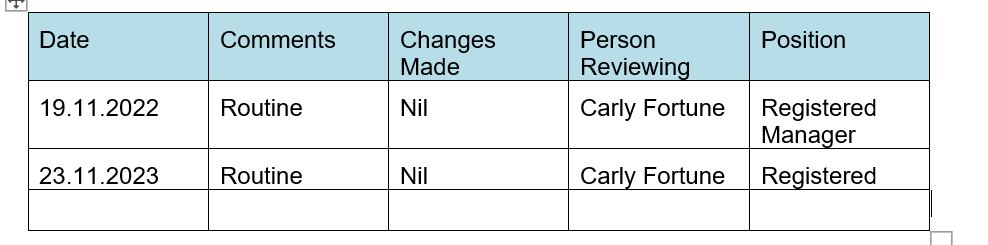
Date Reviewed: November 2021
Person responsible for updating this policy: Carly Fortune
Next Review Date: November 2022